How MMT works: from broad exposure to lasting repair.
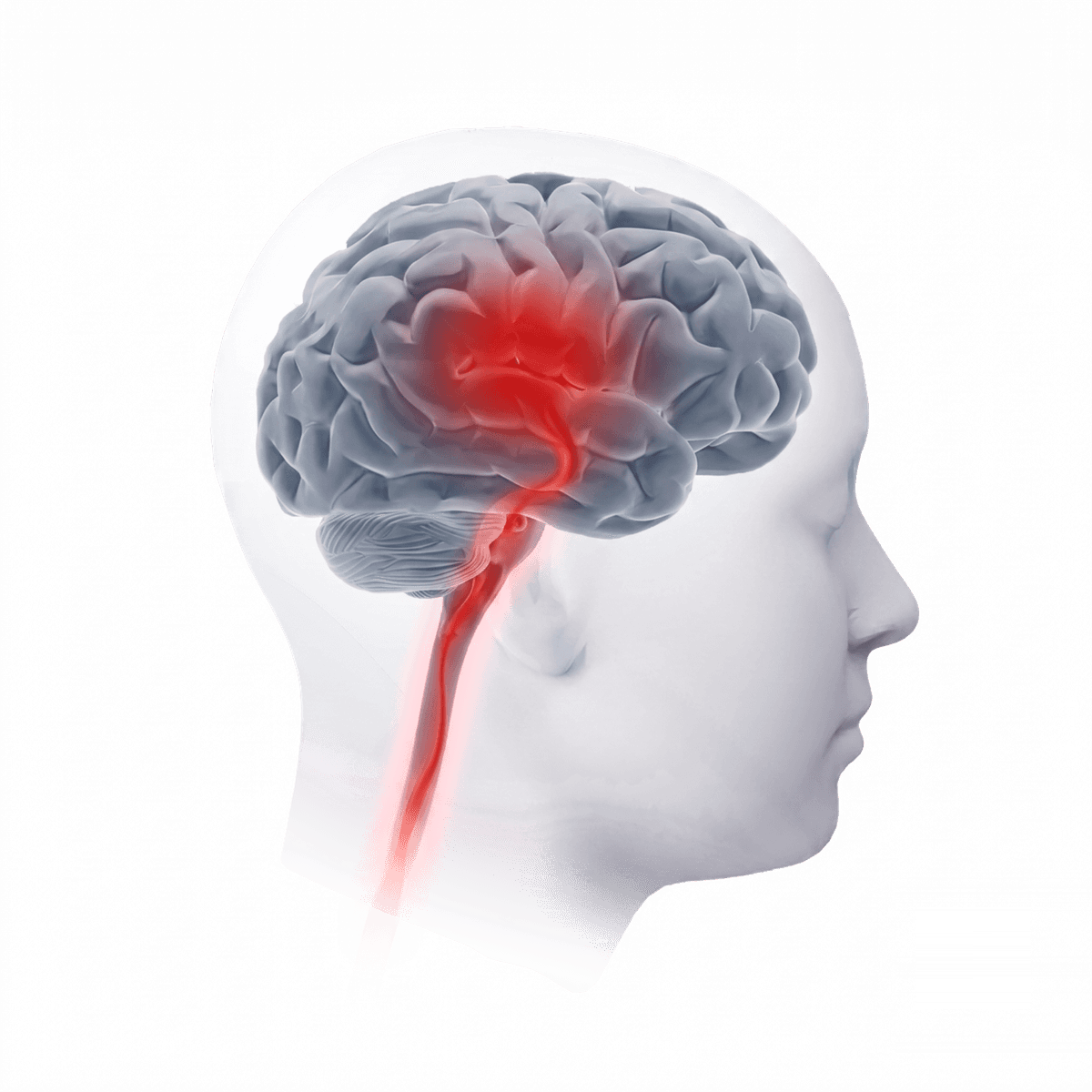
A head-worn device delivers a low-intensity field that reaches deep brain structures, engages redox biology, lowers inflammation and turns on repair signaling.
- 01 · Deliver
Broad brain exposure
A low-intensity field passes unimpeded through the skull and reaches deep brain structures.
- 02 · Engage
Redox biology
Preclinical studies show Microtesla Magnetic Therapy (MMT) modulates redox-sensitive signaling and reduces neuronal oxidative stress.
- 03 · Reduce
Less inflammation
MMT reduces inflammatory cytokines and microglial activation in human cell and rat models.
- 04 · Restore
Repair of brain tissue
Growth and repair signaling is activated, with evidence of reduced neuronal stress and tissue injury.
Designed for treatment at home.
Serious adverse events in our first human study1
No systemic exposure, no device-related adverse events, no perceptible sensation (n=30).
Multi-pathway activity across cell types2
Anti-inflammatory and neuroprotective effects in neurons and glia, relevant to many disease states.
Rated for ease of use and convenience
All 30 participants who completed the study received eight treatments at home.
Strong signals that MMT restores cellular function and promotes durable repair, not temporary symptom management.2
1. Two adverse events in the active group, both unrelated to treatment (ankle injury; SARS-CoV-2 reinfection). Canori et al., Brain Communications (2026).
2. Whole-brain, multi-pathway mechanism; evidence of cellular repair. Nguyen et al., iScience (2026).
Effect size by outcome
Cohen's d. Longer bars mean a larger difference from sham.
MMT studied in a triple-blind, randomized, sham-controlled trial.
In this first-in-human feasibility study, MMT was well tolerated, with between-group improvements in working memory, verbal learning, processing speed and emotional well-being. A companion analysis of ~10,500 plasma proteins points to a shift from inflammation toward repair.
Participants
(20 active / 10 sham)
Per at-home treatment session
(8 sessions over 4 weeks)
Serious adverse events
Findings of feasibility study to be confirmed in larger controlled trials.
The clinical response comes with focused protein remodeling, converging on inflammation resolution and repair.
Selective protein remodeling identified
Lower inflammation and injury signals in responders
Higher repair and remodeling biology in responders
“This is the first data I have seen suggesting that restoration of lost function may be possible.”
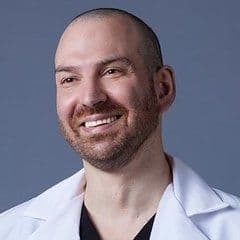 Dr. David PutrinoDirector of Rehabilitation Innovation, Mount SinaiPrincipal investigator of the MMT pilot study
The biology behind MMT’s effect on inflammation:
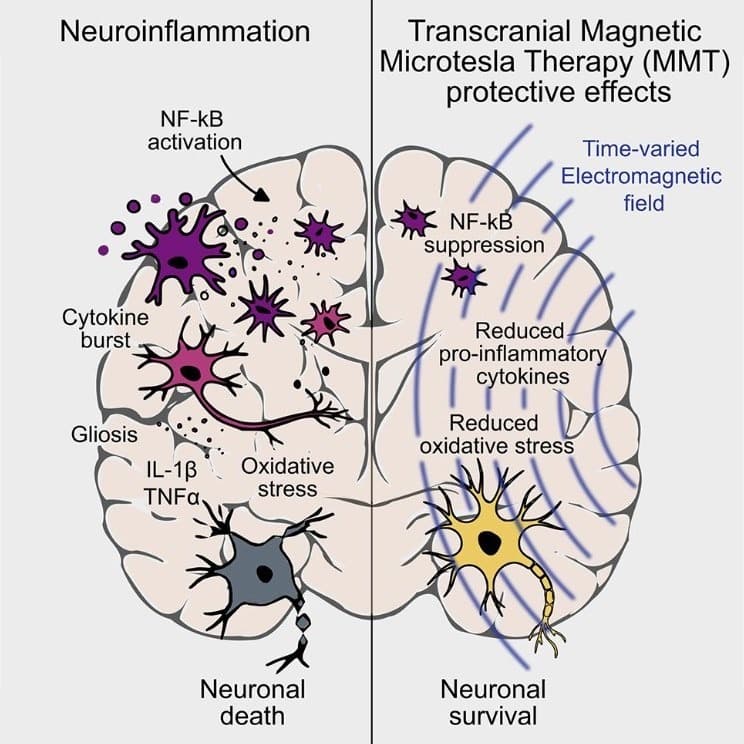
Our peer-reviewed study reports that MMT reduced inflammatory signaling and cytokine release in human immune cells, reduced oxidative stress in neuronal models, and reduced microglial activation and tissue injury in a rat model of neuroinflammation.
- Human immune cells
- ↓ Cytokine release
- Neuronal models
- ↓ Oxidative stress
- Rat neuroinflammation model
- ↓ Microglial activation
Science in the open.
Microtesla magnetic therapy for cognitive impairment in long COVID: a randomized pilot study
Canori et al. · Peer-reviewed
Plasma Proteomics Identifies a Microtesla Magnetic Therapy Response Signature in Long COVID
Brady et al. · Preprint, currently under peer review
Transcranial microtesla magnetic fields suppress neuroinflammation and neuronal oxidative stress burden
Nguyen et al. · Peer-reviewed